Enterprise B2B Platform
Project type
- Enterprise Platform Design
- UX/UI System Design
- Design Systems (Atomic Design)
Stage
- UX Research & IA
- Wireframing (Low → High)
- UI System & Tokens
Deliverables
- Design System (Tokens & Components)
- Responsive Layouts
- User Flows & Prototypes
Context (PL)
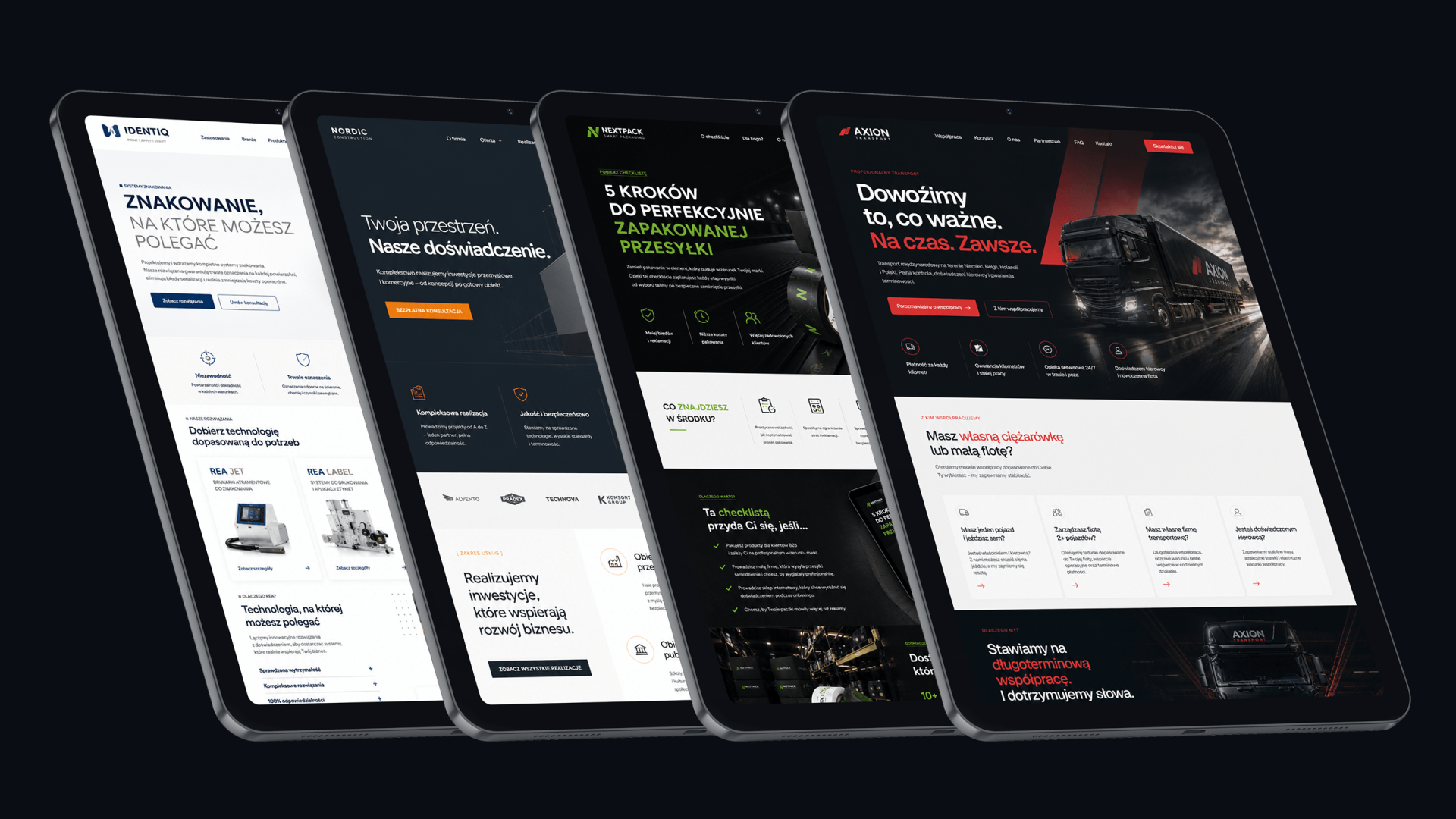
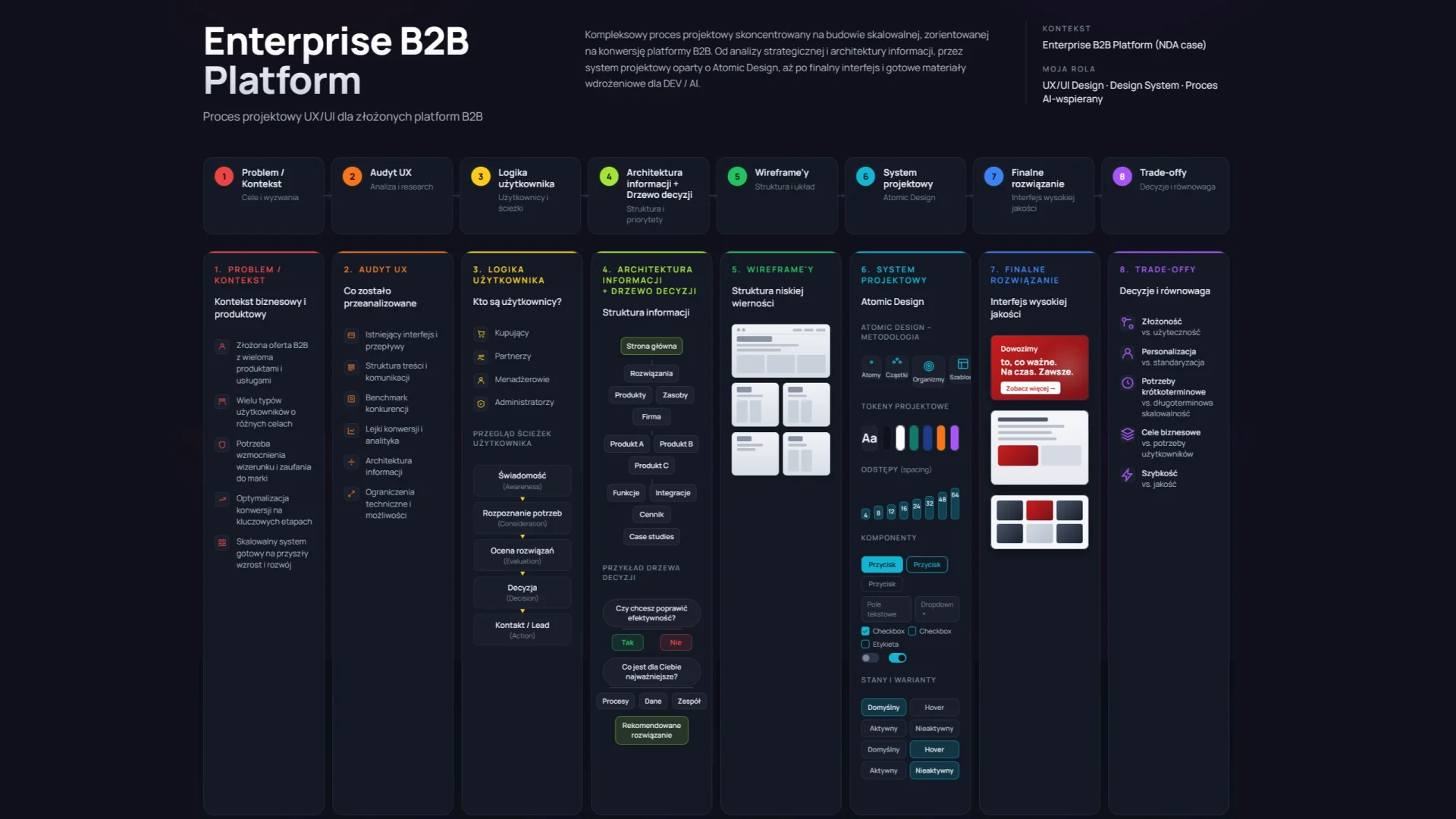
W ciągu ostatniego roku pracowałem nad projektowaniem dużych serwisów B2B dla klientów komercyjnych. Ze względu na umowy NDA studium przedstawia uogólniony proces oraz system projektowy oparty na realnych wdrożeniach. Zakres obejmował projektowanie architektury informacji, makiet UX, interfejsów oraz budowę skalowalnych design systemów opartych o zmienne i podejście Atomic Design.
Istotnym elementem procesu było również świadome wykorzystanie AI jako wsparcia analitycznego i projektowego — od szybszej walidacji hipotez, przez eksplorację wariantów i optymalizację user flow, po utrzymanie spójności systemowej i podejmowanie trafniejszych decyzji projektowych przy zachowaniu pełnej kontroli strategicznej i jakościowej.
Enterprise B2B Platform
I design large-scale B2B platforms focused on lead generation, product presentation, and conversion. My approach combines system thinking, token-driven architecture, and AI-assisted workflows that accelerate validation without compromising design quality.
Challenge
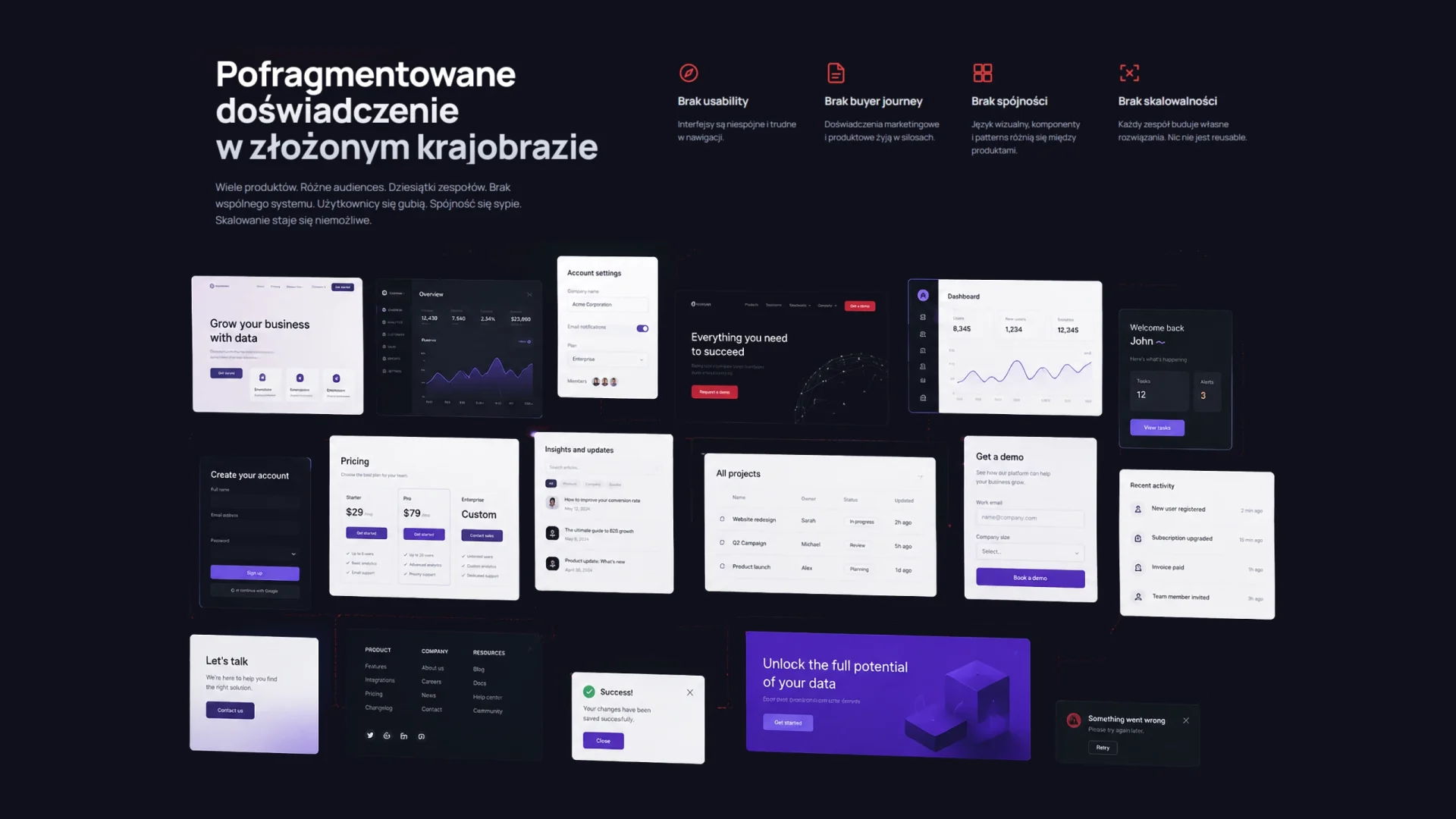
Most B2B platforms fail at one of two extremes — either they’re marketing brochures with no usability, or product UIs no buyer can navigate. The challenge: design one system that handles both, across multiple user types and dozens of pages, without fragmenting into chaos.
Approach
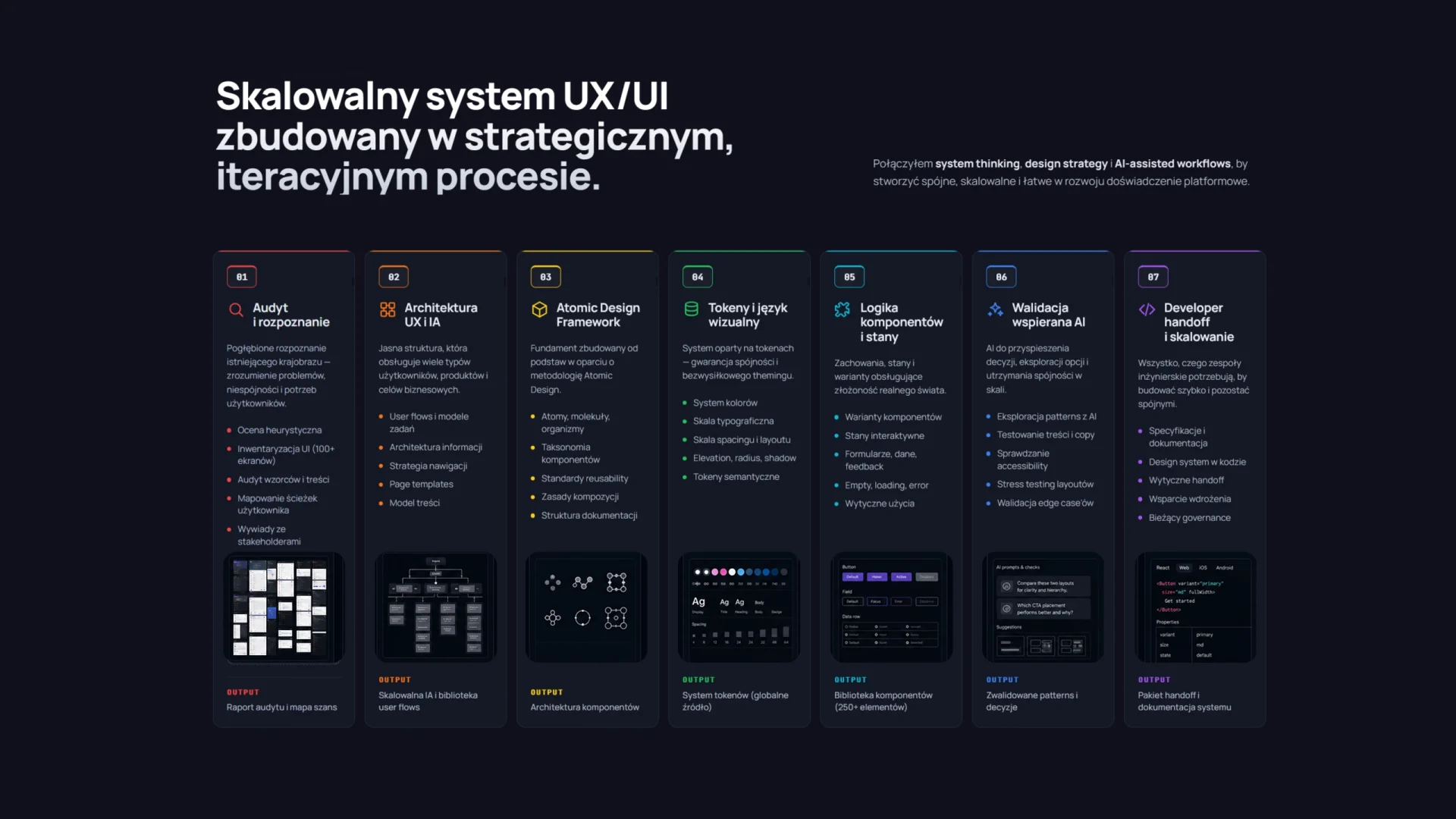
I treat B2B systems as products, not pages. Three convictions shape every decision:
- System over screen. Components are designed once, configured many times — through tokens, not duplication. A new template should cost hours of design time, not days.
- Atomic Design as a contract with developers. Atoms, molecules, organisms aren’t just a methodology — they’re a shared language that lets design and engineering ship in parallel.
- AI as a thinking partner, not a generator. I use LLMs to stress-test IA hypotheses, explore conversion variants, and validate consistency across modules. Strategic and quality decisions stay with me.
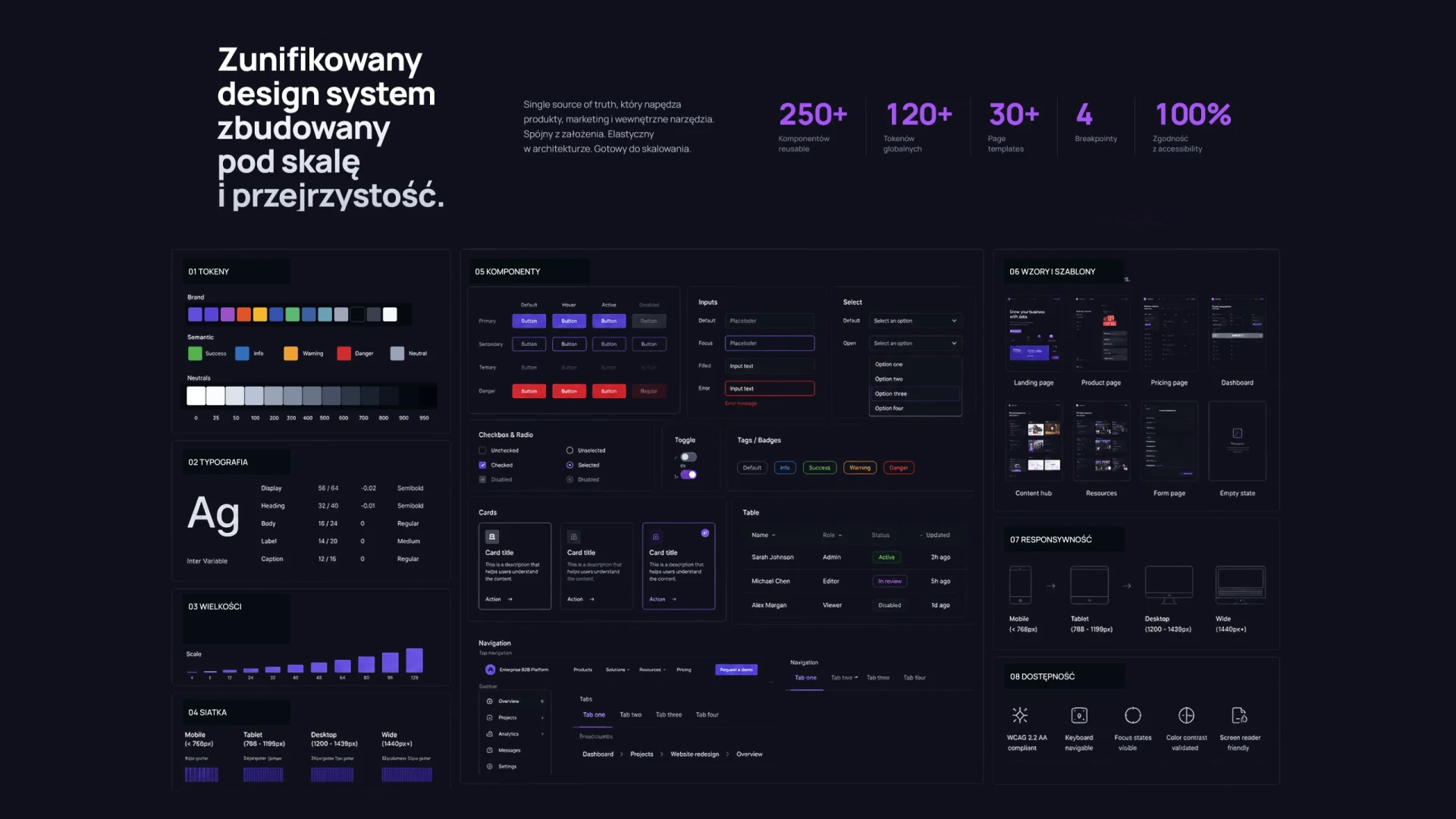
System
- Modular page structures (landing / product / category)
- Reusable components (cards, sections, forms)
- Design tokens (colors, spacing, typography)
- Component states: default, hover, active, focus, disabled, loading, empty, error
- Accessibility baseline aligned with WCAG 2.2 AA (contrast, keyboard navigation, focus order)
- Layout system built for scalability across breakpoints
- AI-supported documentation and pattern validation across complex modules
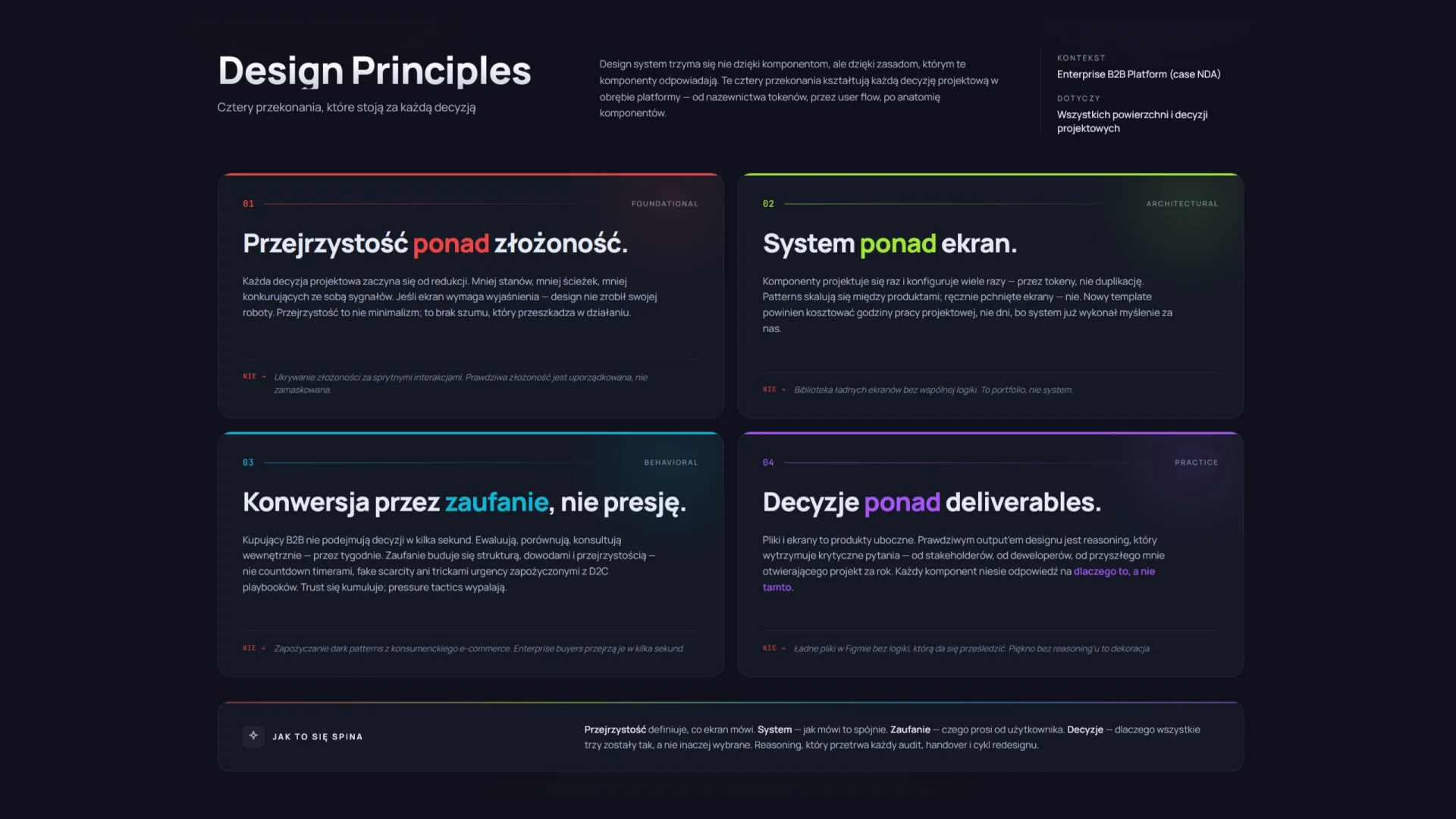
Design Principles
- Clarity over complexity
- System over screen
- Conversion through trust, not pressure
- Decisions over deliverables